

Coffee 101: What All Those Coffee-Shop Words Actually Mean
A plain-English guide to espresso, lattes, cappuccinos, flat whites, macchiatos, cortados, cold brew, pour-over and other coffee-shop terms.
Ever stand at a coffee-shop counter and realize the menu seems to require its own dictionary? Espresso, macchiato, cortado, flat white, cold brew, pour-over. They are all coffee, but they are definitely not all the same drink.
National Coffee Day is a fine time to decode the menu. The good news is that most café vocabulary becomes much easier once you understand a few building blocks: espresso, brewed coffee, water, milk and foam.
First, espresso is a brewing methodEspresso is concentrated coffee made by forcing hot water through finely ground coffee under pressure. It is usually served in a small amount, and it becomes the foundation for many drinks on a café menu.
A shot simply refers to a serving of espresso. A double uses more coffee and produces a larger espresso beverage. Exact recipes vary from shop to shop.
The Specialty Coffee Association's Coffee Skills Program treats espresso preparation as a skill involving grind, dose, tamping, extraction and other variables. That is why two cafés can use similar ingredients and still produce noticeably different espresso.
Americano: espresso meets hot waterAn Americano is espresso diluted with hot water. It gives you a larger cup and a different flavor and texture from ordinary drip coffee, even though the finished drinks may look somewhat similar.
If you like black coffee but want to explore espresso, an Americano is an easy bridge.
Latte: espresso with plenty of steamed milkA latte, short for the Italian caffè latte, combines espresso with steamed milk and a layer of microfoam. Compared with many other espresso-and-milk drinks, it generally contains a larger proportion of milk.
That makes a latte creamy and approachable, and it is also why lattes are such a common canvas for flavored syrups and latte art.
Cappuccino: more emphasis on foamA cappuccino also combines espresso and milk, but traditionally puts more emphasis on textured milk and foam. Modern specialty cafés may prepare cappuccinos somewhat differently from the old textbook idea of perfectly equal thirds of espresso, steamed milk and foam.
The practical distinction for a customer is simple: compared with a latte, expect a cappuccino to be smaller in many cafés, with the coffee more prominent and the milk texture playing a bigger role.
Flat white: small, smooth and espresso-forwardA flat white is another espresso-and-milk drink, typically served smaller than a latte with finely textured microfoam. Because there is usually less milk relative to the espresso, the coffee flavor tends to stand out more.
There is no single worldwide recipe that every café follows, so cup size and espresso dose can vary. Think of it as part of the latte-cappuccino family, but usually compact and smooth. |
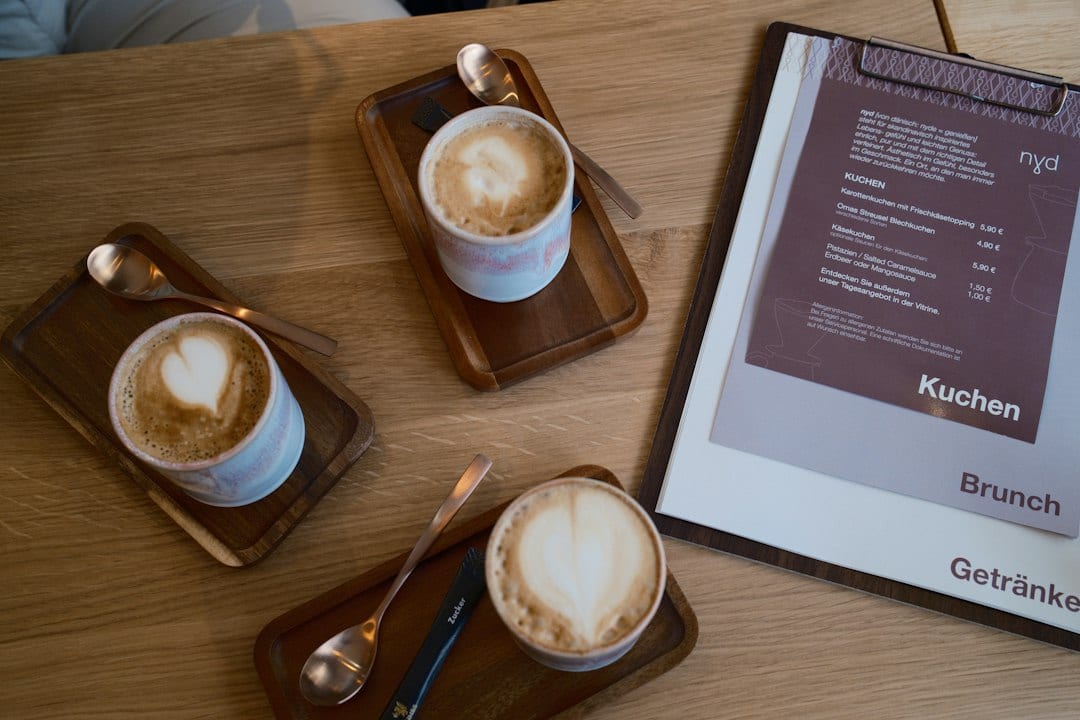
 Coffee-shop menus can look complicated, but most drinks are variations on a few basic building blocks: espresso, brewed coffee, water, milk and foam. Photo by Thang Nguyen on Pexels |
Macchiato: a word that can cause confusionMacchiato comes from an Italian word meaning marked or stained. In the traditional espresso sense, a caffè macchiato is espresso "marked" with a small amount of milk or foam.
But some large coffee chains have used the word for much larger, milk-heavy flavored drinks. If you are ordering at an unfamiliar café, this is one menu item where asking "How do you make your macchiato?" can save a surprise.
Cortado: espresso softened with milkA cortado is generally a small drink combining espresso with warm or steamed milk, with less milk than a typical latte. The idea is to soften the intensity of the espresso without turning it into a large milk drink.
Like the flat white, recipes and serving sizes vary. Café vocabulary has traditions, but it does not have a worldwide coffee police department.
Drip coffee, pour-over and French pressDrip coffee is the familiar brewed coffee many Americans make at home: hot water passes through ground coffee held in a filter, and gravity does the rest.
A pour-over uses the same basic gravity-and-filter idea, but the water is poured manually over the grounds. The brewer controls the pour and timing, which makes it popular with people who enjoy adjusting technique. The SCA publishes a collection of coffee standards and technical resources for professionals and serious coffee enthusiasts.
A French press is an immersion method. Coffee grounds steep directly in hot water before a mesh plunger separates most of the grounds from the beverage. Because there is no paper filter, the finished cup can have a fuller body and more coffee oils.
Cold brew is not just iced coffeeIced coffee generally starts as coffee brewed hot and then cooled or served over ice.
Cold brew is brewed using cool or room-temperature water over a much longer period. The different extraction conditions create a drink with a different flavor profile from hot-brewed coffee poured over ice.
Cold brew may be served straight, diluted, over ice or with milk. Some shops also serve nitro cold brew, which is infused with nitrogen to create a creamy-looking texture and cascading appearance.
What does "single origin" mean?Single origin tells you the coffee came from one identifiable origin rather than being blended from several origins. How specific that origin is can vary. It might mean one country, one region, one cooperative, one farm or an even more specific lot.
A blend combines coffees, often to create a particular flavor profile or maintain consistency. Neither single-origin coffee nor a blend is automatically better. They simply represent different approaches.
Light, medium and dark roastThese terms describe how far coffee has been roasted, but labels are not perfectly standardized between roasters. Generally, lighter roasting preserves more of the acidity and origin characteristics people associate with a particular coffee, while darker roasting brings more roast-driven flavors to the foreground.
The SCA's Coffee Decoded explanation of roast color describes how heat drives chemical reactions that create many of roasted coffee's aromas and flavors.
Microfoam, dry and wetMicrofoam is milk textured with extremely small bubbles, creating the glossy, almost paint-like texture baristas use for drinks such as lattes and flat whites.
You may also hear someone order a cappuccino dry, generally asking for more foam and less liquid milk, or wet, asking for relatively more steamed milk and less foam. How a shop interprets those requests can vary.
And what exactly is a barista?A barista is the person preparing and serving coffee, particularly espresso drinks. In a specialty café, the job can involve far more than pushing buttons: dialing in grinders, evaluating extraction, steaming milk, understanding beans and processing, keeping equipment clean and serving a line of customers without losing track of six drinks at once.
So the next time the menu looks like another language, remember that most of it comes back to a few choices. Do you want espresso or brewed coffee? Milk or no milk? A little milk or a lot? Hot or cold? Strong and concentrated or long and easy to sip?
Once you know those answers, you already speak enough coffee to order with confidence. |
Stay up to date with our local news!
Get articles like this delivered to your inbox.
Subscribe Now
Sep 29, 2026
How Coffee Became an American Habit
The American coffee story stretches from colonial gathering places to diner counters and today's specialty cafés.
Sep 29, 2026
Take Your Coffee Cup Around the World
Learn why origin matters, then compare coffees from several producing countries at your own kitchen table.
Sep 29, 2026
Build a Better Coffee Bar at Home
Better home coffee starts with a few fundamentals, not a counter full of gadgets.
Sep 29, 2026
A local coffee guide for Battle Creek
A neighborly guide to cafés, local beans, and making time for a good cup.
1 Comment
Join the conversation
I thought a flat white was just a small latte.