

Energy Project Proposals: Why Michigan? Why Rural Communities? Why Now?
Exploring the surge in renewable energy initiatives across Michigan's rural landscape and the factors driving this trend.
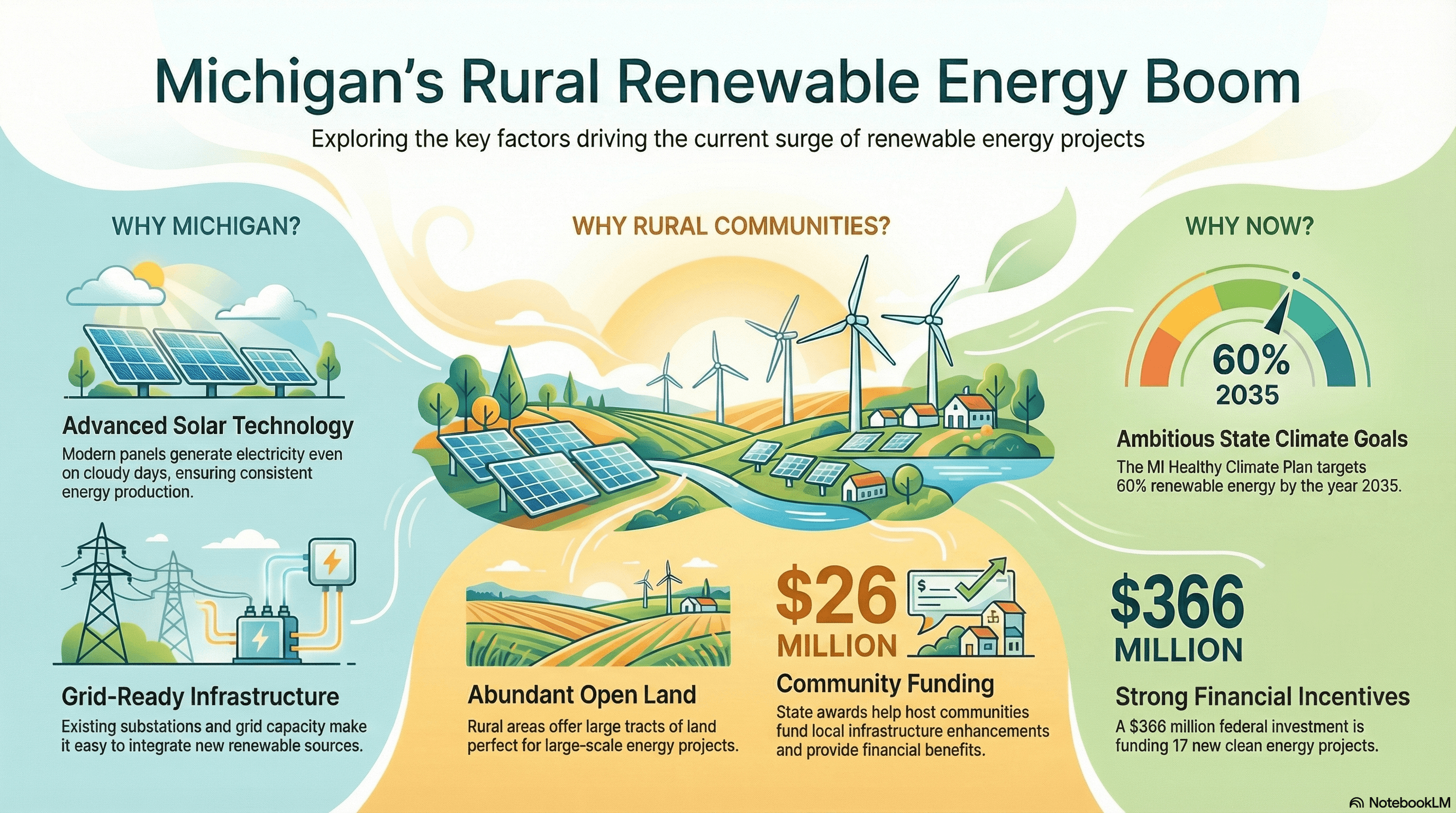
Michigan is witnessing a significant uptick in renewable energy projects, particularly in its rural areas.
But what factors are driving this trend?
And why is now the opportune moment for such developments?
Why Michigan?
Despite its reputation for cloudy skies, Michigan's advancements in solar technology have made it a viable location for solar energy projects.
Modern solar panels can generate electricity even on overcast days, ensuring consistent energy production.
Additionally, Michigan's existing infrastructure, including substations and grid capacity, facilitates the integration of renewable energy sources.
Why Rural Communities?
Rural areas offer expansive tracts of land suitable for large-scale energy projects.
Landowners in these regions often find leasing their property for renewable energy both financially beneficial and a means to retain ownership amid economic uncertainties.
Moreover, hosting such projects can lead to community improvements.
For instance, the Michigan Department of Environment, Great Lakes, and Energy (EGLE) has awarded over $26 million to 43 counties, cities, and townships hosting renewable energy projects, funding local infrastructure enhancements.
Why Now?
Several factors converge to make the present an ideal time for renewable energy initiatives in Michigan.
State policies, such as the MI Healthy Climate Plan, aim for 60% renewable energy by 2035, providing a clear directive for clean energy adoption.
Financial incentives, including grants and awards from state departments, support communities in hosting these projects.
Additionally, the federal government's commitment to clean energy, exemplified by a $366 million investment to fund 17 clean energy projects in underserved and remote areas, underscores the national momentum toward renewable energy.
In summary, Michigan's combination of technological advancements, supportive policies, and financial incentives positions its rural communities at the forefront of the renewable energy movement.
Embracing these projects not only addresses environmental concerns but also offers economic and infrastructural benefits to the communities involved. |
Stay up to date with our local news!
Get articles like this delivered to your inbox.
Subscribe Now
Sep 9, 2026
Tower of Power at FireKeepers
Holiday and Hits Tour arrives Dec. 10.

Sep 9, 2026
Battle Creek home fire reported
Official details remain pending.

Sep 9, 2026
One Final Meal at Clara’s on the River | Cereal City Buzz
A firsthand look at one final meal at Clara’s on the River in Battle Creek, including the food, service, memories and what may come next.

Sep 9, 2026
27 26th St N Battle Creek Home | Cereal City Buzz
Explore a $225,000 Lakeview home at 27 26th St N in Battle Creek with 3 bedrooms, hardwood floors, a fenced yard, garage, and no HOA.
0 Comments
Join the conversation
Be the first to comment
Share your thoughts above.