
Nasal Spray Recalled from Michigan Walgreens Due to Bacterial Contamination
Over 41,000 bottles of Walgreens Saline Nasal Spray with Xylitol recalled nationwide due to potential bacterial contamination. Consumers advised to discontinue use immediately.
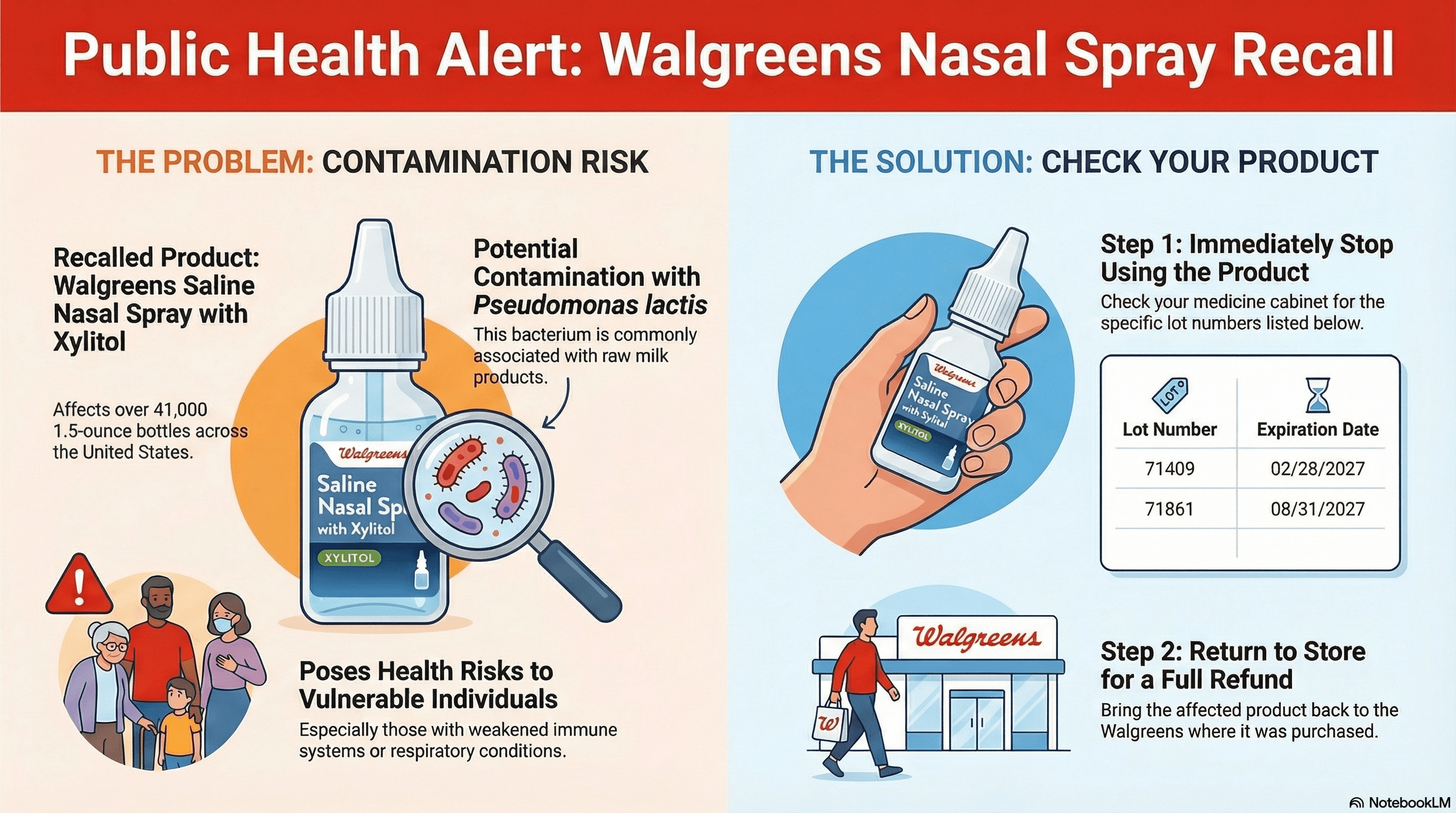
In a significant health alert, more than 41,000 bottles of Walgreens Saline Nasal Spray with Xylitol have been recalled across the United States, including Michigan, due to potential bacterial contamination.
The Food and Drug Administration (FDA) announced that the 1.5-ounce bottles may be contaminated with Pseudomonas lactis, a bacterium commonly associated with raw milk products.
This microorganism can pose health risks, especially to individuals with weakened immune systems or respiratory conditions.
The recall affects two specific lot numbers:
Lot #71409 with an expiration date of 02/28/2027
Lot #71861 with an expiration date of 08/31/2027
Consumers are urged to check their medicine cabinets and discontinue use of these products immediately.
According to the FDA, this recall is classified as a Class II, indicating that the use of the product may cause temporary or medically reversible adverse health consequences.
While the probability of serious health issues is considered remote, caution is advised.
A spokesperson for Walgreens stated, "Under the guidance of the FDA, our supplier has initiated a voluntary recall of Walgreens Saline Nasal Spray with Xylitol. This was done out of an abundance of caution, and the safety of our customers remains our top priority."
Customers who have purchased the affected nasal spray are advised to stop using it immediately and return it to the store where it was purchased for a full refund.
For further information or questions, consumers can contact Walgreens customer service or visit their local store.
As the cold and flu season progresses, it's crucial to stay informed about product recalls to ensure the safety and well-being of all consumers.
Regularly checking for updates from the FDA and other health authorities can help prevent potential health risks associated with contaminated products. |
Stay up to date with our local news!
Get articles like this delivered to your inbox.
Subscribe Now
Sep 9, 2026
Tower of Power at FireKeepers
Holiday and Hits Tour arrives Dec. 10.

Sep 9, 2026
Battle Creek home fire reported
Official details remain pending.

Sep 9, 2026
One Final Meal at Clara’s on the River | Cereal City Buzz
A firsthand look at one final meal at Clara’s on the River in Battle Creek, including the food, service, memories and what may come next.

Sep 9, 2026
27 26th St N Battle Creek Home | Cereal City Buzz
Explore a $225,000 Lakeview home at 27 26th St N in Battle Creek with 3 bedrooms, hardwood floors, a fenced yard, garage, and no HOA.
0 Comments
Join the conversation
Be the first to comment
Share your thoughts above.