

Could Your Business's Everyday Operations Have Value in the AI Economy?
An emerging AI data partnership opportunity local Calhoun County businesses may want to understand

When most people think about artificial intelligence, they picture chatbots, computer-generated images, or software that helps write an email.
But an emerging corner of the AI economy is focused on something quite different: learning how established businesses actually get their work done.
Some AI data companies are exploring paid partnerships with businesses willing and legally able to license eligible operational information for training and evaluating AI systems.
For business owners in Battle Creek and Calhoun County, it's a new opportunity worth knowing about—not a promise of easy money, and certainly not a fit for every company.
Why would AI developers want business information?
AI can learn facts from books and websites, but it also needs examples of how people solve practical problems, complete complex tasks, and coordinate real work.
Think about a restaurant: keeping food costs under control, coordinating deliveries, scheduling employees, managing inventory, and teaching new team members how things are done.
With rising food prices, wages, utilities, and other expenses squeezing margins, restaurant operators and many other business owners are looking for a little breathing room.
If a company qualifies for a paid data partnership, that compensation could provide a helpful additional source of revenue, perhaps easing financial pressure or helping pay for improvements.
But it is best viewed as a possible one-time financial boost, not a guaranteed ongoing income stream.
A manufacturer may have documented production workflows, quality-control procedures, and project histories; a logistics company may have years of dispatch and coordination processes.
An accounting firm may maintain documented procedures for handling complex tasks and meeting deadlines, although client confidentiality introduces important restrictions.
That operational experience—not simply a pile of confidential customer files—is what makes this emerging area interesting.
What is Micro One?
One company operating in this space is Micro One (micro1), an AI data company with a business data partnership program.
The idea is to evaluate whether a qualifying company has operational information that could be useful for developing AI systems.
Relevant material may include standard operating procedures, internal training documents, knowledge bases, project workflows, or records showing how teams organize their work.
Not every type of document will be suitable, and no company should assume it can license information simply because it possesses a copy.
Customer information, employee records, proprietary client material, contract restrictions, and other confidential content require special attention.
Any serious evaluation should address consent, ownership, security, permitted uses, and how sensitive information is handled before data is transferred.
Could a participating business receive payment?
Potentially, yes, but an inquiry is only the beginning of the process.
The prospective buyer would need to determine whether the available material fits its needs and whether a lawful agreement can be reached.
Compensation, if offered, depends on factors such as the suitability, quality, volume, uniqueness, and licensing terms of the information.
Large figures featured in promotional materials are potential outcomes rather than a typical or guaranteed payment.
What kinds of companies might be interested?
Established businesses in manufacturing, professional services, accounting, recruiting, logistics, technology, hospitality, and other industries may have relevant experience.
Programs often prioritize companies with a substantial operating history, multiple digital systems, organized records, and larger teams.
Micro One's advertised enterprise criteria emphasize larger established firms, while other providers may use different thresholds.
For a small independent restaurant or a very small professional office, qualification may be less likely than for a multi-location business with extensive documented systems.
The only reliable way to learn whether a particular business fits is to ask the provider and review its actual requirements.
What happens when a business asks for more information?
The first step generally involves sharing basic company information such as industry, number of employees, and operating history.
The provider may then discuss the company's software, documentation, and potential data categories to determine whether an evaluation makes sense.
Requesting information does not itself mean agreeing to license data.
Business owners should read the terms carefully and consult appropriate legal, technical, and privacy advisers before signing a contract or transferring records.
Why we're sharing this opportunity
We learned about these developing referral opportunities through Quantum Reach, a training and referral program that introduces businesses to AI data partnership providers.
Our role is to call attention to the possibility and help interested owners reach the provider—not to buy their records, set valuations, or handle confidential information.
Sometimes supporting local business means spotlighting a new option before it becomes widely familiar.
Calhoun County businesses have spent years building processes and learning hard-earned lessons about how to serve customers and stay in business.
Some may find this opportunity relevant, and others may decide it isn't for them.
Either outcome is perfectly reasonable; we simply want local owners to be informed.
Interested in exploring it?
You can see if your business qualifies by visiting Micro One's initial registration page, or use the accompanying banner to explore the opportunity.
Three Quick Questions About AI Data Partnerships
1. Does my business have to be a technology company to qualify? No. Companies in manufacturing, hospitality, accounting, logistics, and many other industries may have useful operational workflows. Eligibility depends on the provider's current requirements, the business's size and history, and the records it can lawfully license.
2. Would I have to share confidential customer or employee information? Do not submit sensitive records as part of an initial inquiry. A potential provider should explain the categories of data sought, privacy protections, anonymization process, and contractual requirements. Owners should seek qualified legal and privacy guidance before transferring any business data.
3. Does checking eligibility mean I have to sign an agreement? No. Requesting information or completing an initial registration is not the same as accepting a data-licensing agreement. A company should review the terms and decide for itself whether any proposed partnership makes sense; acceptance and compensation are not guaranteed.
Disclosure: Sutherland Digital Media participates in a referral program through Quantum Reach and may receive compensation if an introduced business completes a qualifying paid partnership.
There is no guarantee of acceptance or payment, and this informational article is not legal, financial, or data-security advice. |
Stay up to date with our local news!
Get articles like this delivered to your inbox.
Subscribe Now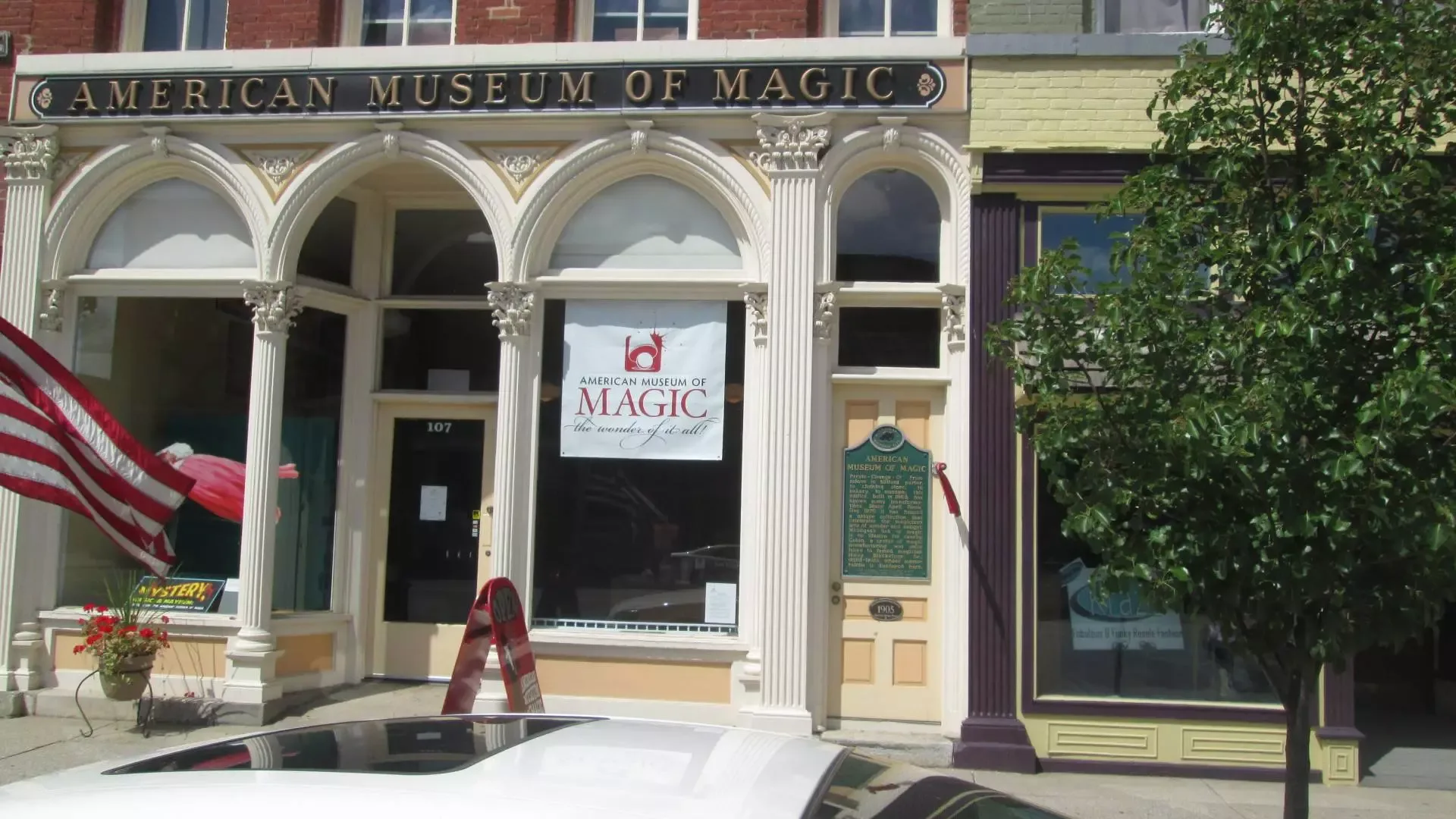
Nov 5, 2026
Houdini Centennial Séance at Marshall Magic Museum
Houdini centennial séance draws about 60 people to Marshall’s American Museum of Magic, where no unexplained manifestation was confirmed.

Nov 5, 2026
KCC Honors Seven Faculty and Staff Members in Battle Creek
Student support, teaching and career training leaders receive 2026 awards

Nov 5, 2026
Battle Creek Election Results for November 3rd, 2026
Unofficial Calhoun County results show Mark Behnke leading for Battle Creek mayor, plus commission, school board, Marshall and Springfield totals.
Nov 4, 2026
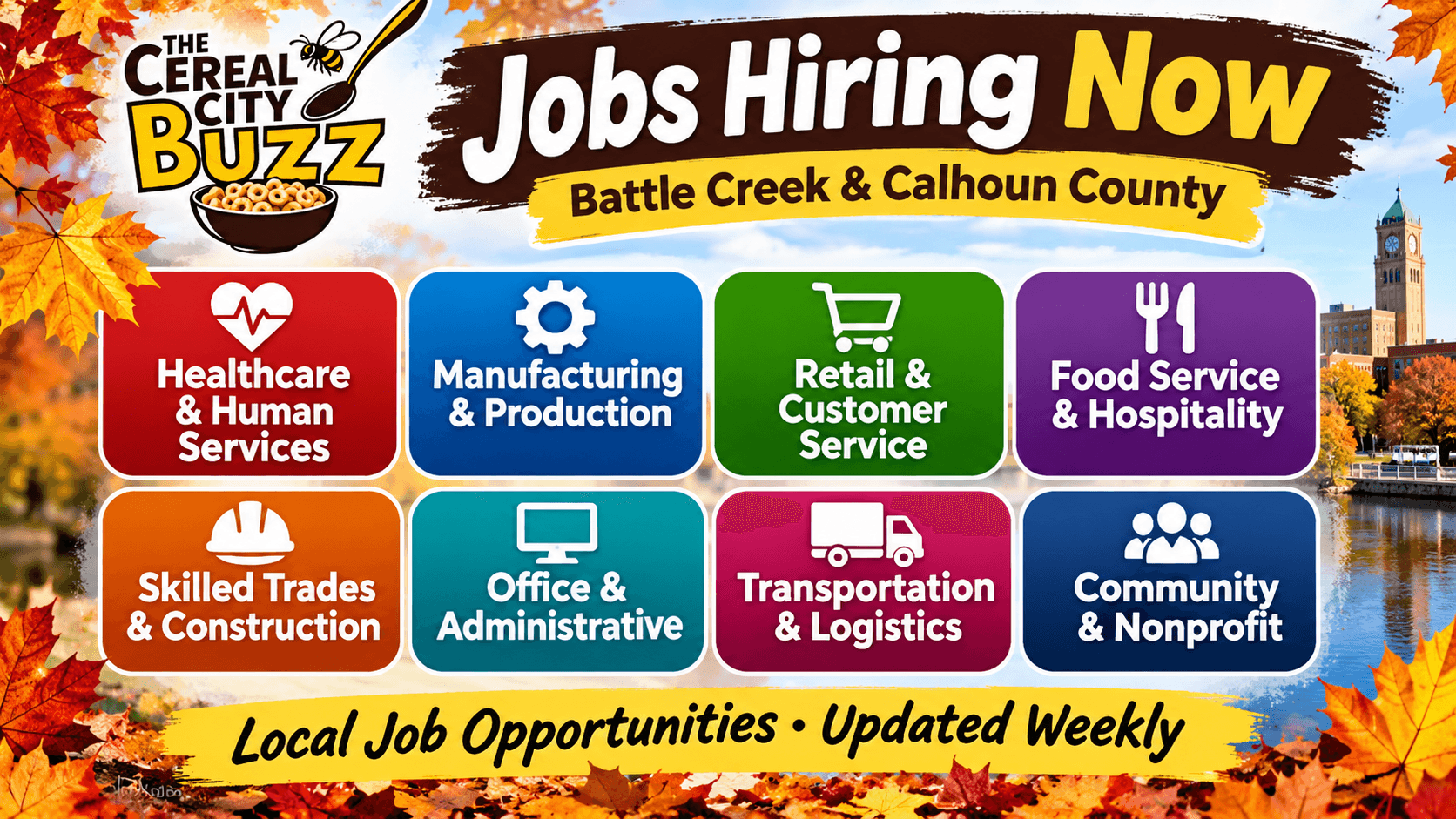
Jobs Hiring Now: Battle Creek & Calhoun County
November 4, 2026 | Eight employment categories and local employer career resources
0 Comments
Join the conversation
Be the first to comment
Share your thoughts above.