

"The Skinny on Weight-Loss Meds: A Game-Changer for Consumer Habits"
The Impact of Weight-Loss Meds on Consumer Spending: A Deep Dive into the Changing Economic Landscape
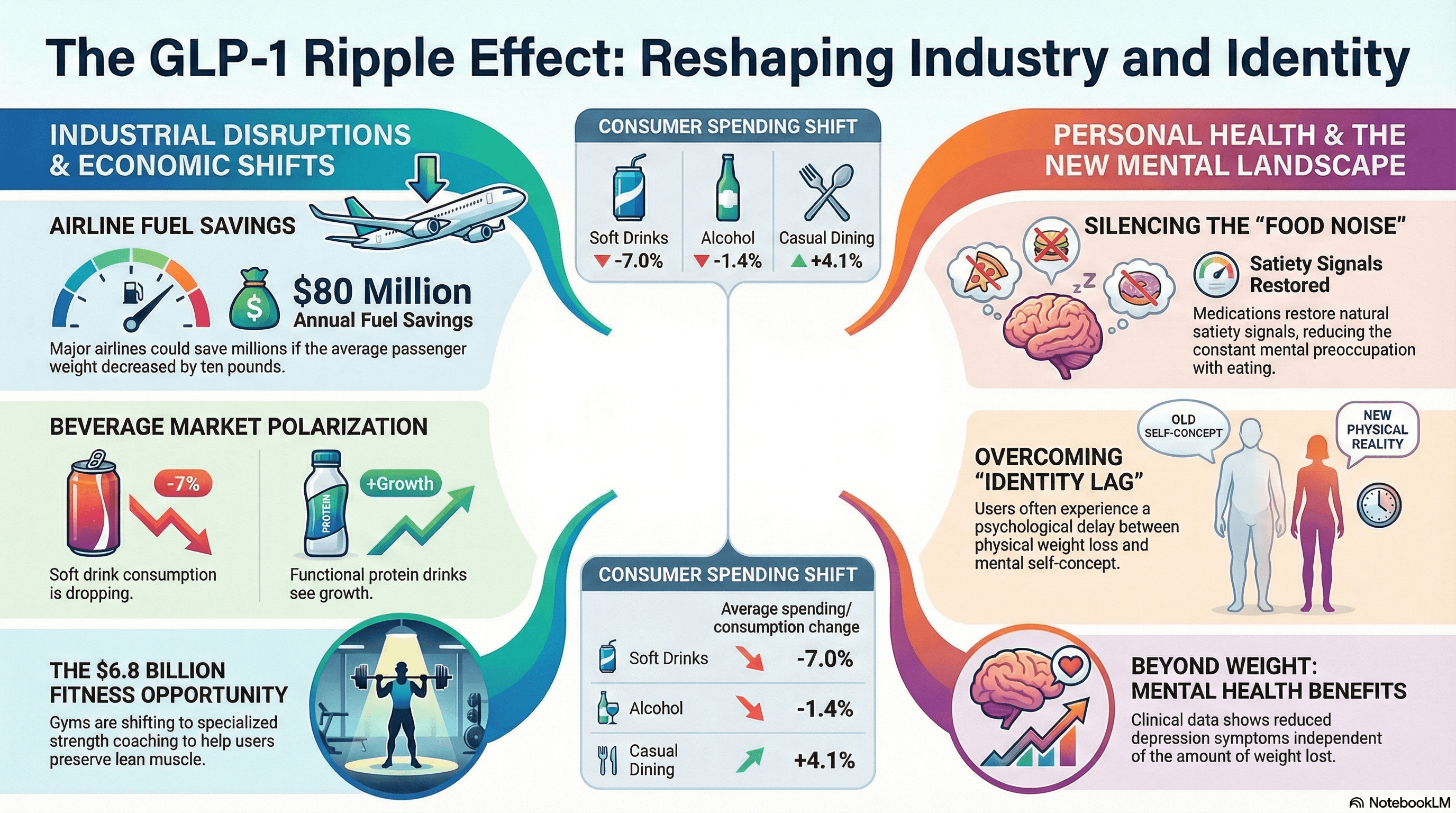
Reshaping Society: The Ripple Effects of GLP-1 Medications
The rapid ascent of GLP-1 receptor agonists is catalyzing a profound societal shift, transforming obesity from a perceived moral failing into a manageable biological condition.
As millions of Americans adopt these treatments, the ripple effects are reshaping industries, altering personal health trajectories, and redefining mental well-being.
Personal and Mental Health Implications
The most immediate impact of GLP-1s is psychological liberation. By dampening "food noise", the constant mental preoccupation with eating.
These drugs allow patients to feel "normal" around food without exerting heroic willpower.
This biological intervention disrupts the cycle of shame and self-blame often associated with diet culture, potentially reducing the depression and anxiety that correlate with repeated failed dieting attempts.
Recent studies indicate that patients taking semaglutide show reduced symptoms of depression independent of weight loss itself.
However, rapid weight change introduces complex psychological challenges.
Qualitative data reveals that individuals often experience "identity lag," where their internal self-concept fails to keep pace with their changing physical reality.
Formerly overweight individuals may struggle to identify as thin, feeling like "visitors" in their new bodies or living in fear of regaining the weight,.
This suggests a need for psychological support alongside medical treatment to help patients navigate these identity shifts.
Industry Disruption: Food and Fitness
Consumer behavior is shifting markedly, forcing industries to adapt.
In the beverage sector, GLP-1 users are moving away from high-sugar soft drinks and alcohol, with nearly half of users reporting reduced alcohol consumption.
Conversely, sales of functional beverages, such as protein shakes and meal replacements, are rising as users seek nutritional support to maintain lean muscle mass.
The restaurant industry faces a similar evolution. While users may reduce grocery spending, data suggests their spending at restaurants actually increases slightly after the first year of treatment.
However, their orders are changing; diners are avoiding fried appetizers and desserts in favor of healthier options.
The fitness industry views the rise of GLP-1s as a massive economic opportunity, potentially expanding the gym market by $6.8 billion.
Operators hope to attract the "80%" of Americans who do not currently belong to a gym by offering specialized programming.
Gyms are increasingly positioning themselves as partners in medical weight loss, offering coaching and support to help users convert the medication's effects into long-term healthy habits.
Challenges Ahead
Despite these advances, the high demand for GLP-1s has spawned a dangerous "gray market" of compounded drugs.
Unregulated facilities are flooding the market with unverified products, some containing impurities or toxic substances, posing severe safety risks to consumers.
As society medicalizes obesity, ensuring safe access while managing the economic and psychological shockwaves of this transition remains a critical challenge.
Q&A: Understanding the GLP-1 Shift
2. What is "identity lag," and why is it a significant challenge for patients? "Identity lag" is a psychological phenomenon where a person’s physical appearance changes faster than their internal self-image. Even after significant weight loss, individuals may still perceive themselves as overweight or feel like an "imposter" in a smaller body. This disconnect can lead to social anxiety or a persistent fear of weight regain, highlighting that medical weight loss requires mental health support to help patients integrate their new physical reality into their self-concept.
3. Which industries stand to lose—and gain—the most from the rise of these medications?
|
Stay up to date with our local news!
Get articles like this delivered to your inbox.
Subscribe Now
Sep 9, 2026
Tower of Power at FireKeepers
Holiday and Hits Tour arrives Dec. 10.

Sep 9, 2026
Battle Creek home fire reported
Official details remain pending.

Sep 9, 2026
One Final Meal at Clara’s on the River | Cereal City Buzz
A firsthand look at one final meal at Clara’s on the River in Battle Creek, including the food, service, memories and what may come next.

Sep 9, 2026
27 26th St N Battle Creek Home | Cereal City Buzz
Explore a $225,000 Lakeview home at 27 26th St N in Battle Creek with 3 bedrooms, hardwood floors, a fenced yard, garage, and no HOA.
0 Comments
Join the conversation
Be the first to comment
Share your thoughts above.