

Battle Creek Fights to Keep 1,400 Federal Jobs | Hart-Dole-Inouye Federal Center
Battle Creek leaders are fighting to save 1,400 federal jobs as the government plans to sell the historic Hart-Dole-Inouye Federal Center by 2029.
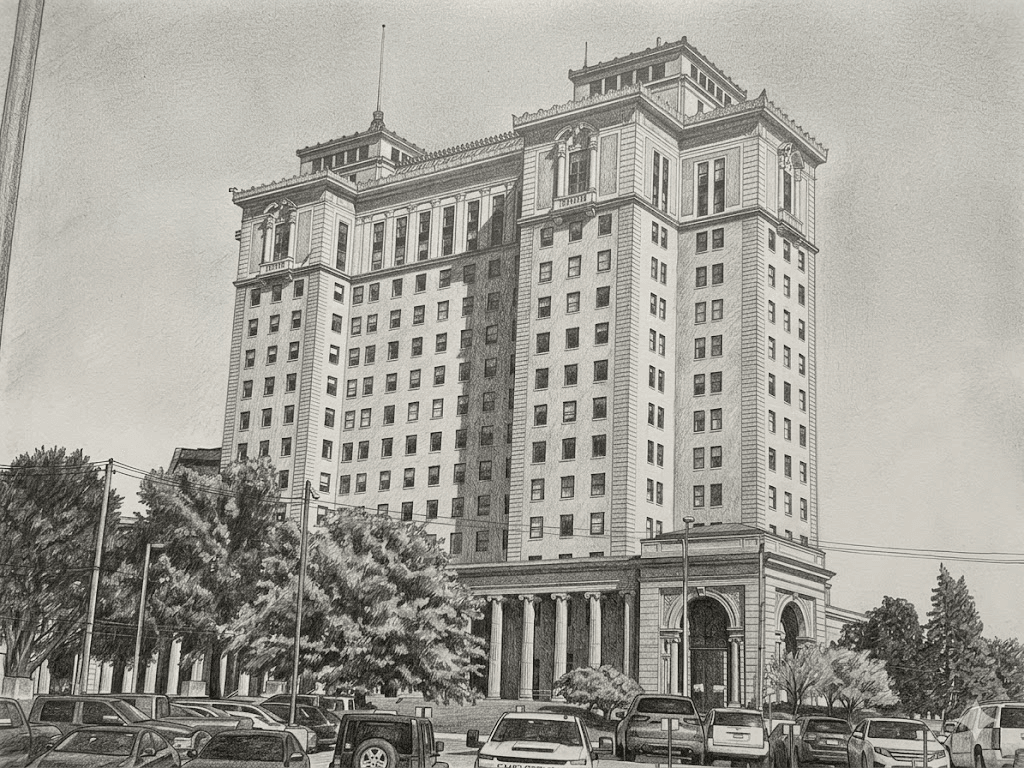
Battle Creek is facing one of its biggest economic challenges in decades. The federal government has announced plans to sell or close the historic Hart-Dole-Inouye Federal Center, putting 1,400 local jobs on the line.
The 24-acre complex on the north side of downtown has been a cornerstone of Battle Creek's economy since World War II. Now, the U.S. General Services Administration says the property is "underutilized and functionally obsolete" and wants it vacated by December 2029.
Mayor Mark Behnke isn't taking the news lying down. "We know we have a lot of work to do," he told The Detroit News. "We've got three years to do it, and we're going to put our best foot forward."
The federal center is home to the Defense Logistics Agency's Disposition Services headquarters, which employs about 1,375 people. Their job? Managing excess military property—everything from air conditioning units to computers. Another 100 staff work at the Federal Protective Services MegaCenter, one of only three in the country monitoring security systems for federal facilities nationwide.
For Battle Creek, a community of 52,000 residents, these aren't just numbers on a spreadsheet. The federal government is the city's largest employer. Losing these jobs would ripple through the entire local economy.
Joe Sobieralski, president of Battle Creek Unlimited, says job preservation is priority number one. "Unfortunately, the building comes secondary to preserving the jobs," he explained. "That's a lot of jobs."
One solution on the table: constructing a new facility at the Kellogg Air National Guard Base at Battle Creek Executive Airport. Defense Logistics Agency leadership is already exploring the feasibility of leasing or building there.
The property itself carries deep historical significance. It started as a wellness institute in 1866, became the famous Battle Creek Sanitarium under Dr. John Harvey Kellogg in 1876, and treated celebrities like Henry Ford and Amelia Earhart. During World War II, it became a military hospital treating nearly 95,000 injured soldiers.
The center got its current name in 2003, honoring three U.S. senators who were patients there during the war: Philip Hart of Michigan, Bob Dole of Kansas, and Daniel Inouye of Hawaii.
The federal government says selling the property will save taxpayers $170 million in overdue maintenance and $6 million annually in operating costs. But local leaders argue the government should invest in renovating the building instead of abandoning it.
"They've had this building since the '40s," Mayor Behnke said. "Taking care of a building is their responsibility, but it sounds as though they want to neglect that responsibility and move on."
The property survived a closure attempt in 1993 under President Bill Clinton. Battle Creek is hoping history repeats itself, but this time the stakes feel even higher.
Michigan's congressional delegation is engaged, with Senator Gary Peters and Representative Bill Huizenga both working to preserve the jobs. But Sobieralski wants to see more state involvement.
"Where is the state at on this?" he asked, pointing to hundreds of millions invested in other Michigan projects. "Battle Creek can't do it alone."
For now, the community has three years to find a solution. The question is whether that's enough time to save 1,400 jobs and preserve a piece of Battle Creek's history.
Frequently Asked Questions
Q: When will the Hart-Dole-Inouye Federal Center close?
Q: What kinds of jobs are at risk at the federal center?
Q: Can the jobs stay in Battle Creek even if the building is sold? |
Stay up to date with our local news!
Get articles like this delivered to your inbox.
Subscribe Now
Sep 9, 2026
Tower of Power at FireKeepers
Holiday and Hits Tour arrives Dec. 10.

Sep 9, 2026
Battle Creek home fire reported
Official details remain pending.

Sep 9, 2026
One Final Meal at Clara’s on the River | Cereal City Buzz
A firsthand look at one final meal at Clara’s on the River in Battle Creek, including the food, service, memories and what may come next.

Sep 9, 2026
27 26th St N Battle Creek Home | Cereal City Buzz
Explore a $225,000 Lakeview home at 27 26th St N in Battle Creek with 3 bedrooms, hardwood floors, a fenced yard, garage, and no HOA.
0 Comments
Join the conversation
Be the first to comment
Share your thoughts above.